Publications
In reverse chronological order. Also on DBLP.
2026
- TrustEnergy: A Unified Framework for Accurate and Reliable User-level Energy Usage PredictionIn AAAI Conference on Artificial Intelligence, 2026
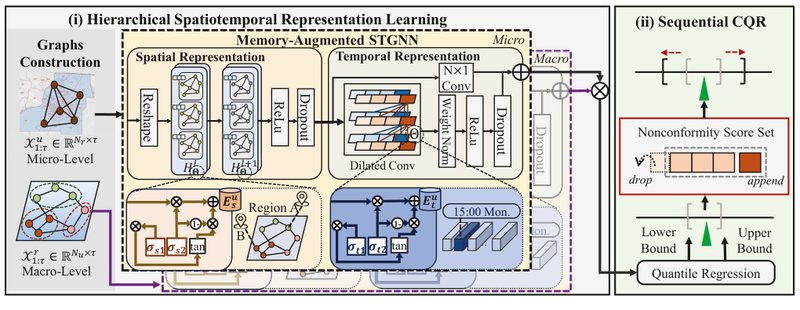
Energy usage prediction is important for various real-world applications, including grid management, infrastructure planning, and disaster response. Although a plethora of deep learning approaches have been proposed to perform this task, most of them either overlook the essential spatial correlations across households or fail to scale to individualized prediction, making them less effective for accurate fine-grained user-level prediction. In addition, due to the dynamic and uncertain nature of energy usage caused by various factors such as extreme weather events, quantifying uncertainty for reliable prediction is also significant, but it has not been fully explored in existing work. In this paper, we propose a unified framework called TrustEnergy for accurate and reliable user-level energy usage prediction. There are two key technical components in TrustEnergy, (i) a Hierarchical Spatiotemporal Representation module to efficiently capture both macro and micro energy usage patterns with a novel memory-augmented spatiotemporal graph neural network, and (ii) an innovative Sequential Conformalized Quantile Regression module to dynamically adjust uncertainty bounds to ensure valid prediction intervals over time, without making strong assumptions about the underlying data distribution. We implement and evaluate our TrustEnergy framework by working with an electricity provider in Florida, and the results show our TrustEnergy can achieve a 5.4% increase in prediction accuracy and 5.7% improvement in uncertainty quantification compared to state-of-the-art baselines.
@inproceedings{yu2026trustenergy, title = {TrustEnergy: A Unified Framework for Accurate and Reliable User-level Energy Usage Prediction}, author = {Yu, Dahai and Xu, Rongchao and Zhuang, Dingyi and Bu, Yuheng and Wang, Shenhao and Wang, Guang}, booktitle = {AAAI Conference on Artificial Intelligence}, volume = {40}, number = {46}, pages = {39558--39566}, year = {2026}, doi = {10.1609/aaai.v40i46.41307}, } - EnergyMamba: An Uncertainty-Aware Graph-Enhanced Selective State Space Model for Energy Consumption PredictionIn ACM SIGKDD Conference on Knowledge Discovery and Data Mining, 2026
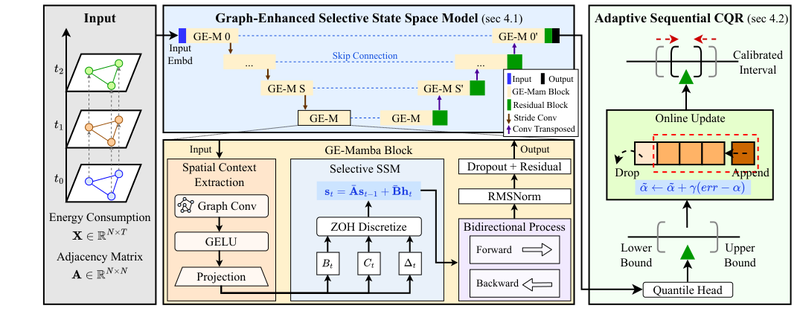
Energy consumption prediction is essential for efficient grid management, demand-side optimization, and sustainable energy planning. Although advanced machine learning methods have been employed for better prediction performance, existing works have two key limitations: (1) they usually formulate this task as a purely time-series prediction problem without explicitly modeling the spatial dependencies among different regions, and (2) they fail to provide reliable predictions with uncertainty estimates under abnormal situations such as extreme weather events. To advance existing research, we propose EnergyMamba, an uncertainty-aware spatiotemporal learning framework for accurate and reliable energy consumption prediction, which comprises two key components: (i) a novel Graph-Enhanced Selective State Space Model (GE-Mamba) that injects spatial context learned from the grid topology into the temporal dynamics, enabling coupled spatiotemporal modeling, and (ii) an Adaptive Sequential Conformalized Quantile Regression (AS-CQR) module, which includes locally adaptive normalization and an online feedback mechanism to dynamically calibrate prediction intervals under potential distribution shifts. We evaluate EnergyMamba on four large-scale real-world datasets from Florida, New York, and California. Results show EnergyMamba achieves around 5% improvement in prediction accuracy and 6% improvement in uncertainty quantification over 15 state-of-the-art baselines.
@inproceedings{yu2026energymamba, title = {EnergyMamba: An Uncertainty-Aware Graph-Enhanced Selective State Space Model for Energy Consumption Prediction}, author = {Yu, Dahai and Xu, Rongchao and Jiang, Lin and Wang, Guang}, booktitle = {ACM SIGKDD Conference on Knowledge Discovery and Data Mining}, pages = {12727--12738}, year = {2026}, doi = {10.1145/3770855.3818841}, } - HealthMamba: An Uncertainty-aware Spatiotemporal Graph State Space Model for Effective and Reliable Healthcare Facility Visit PredictionIn International Joint Conference on Artificial Intelligence, 2026AI and Health Track
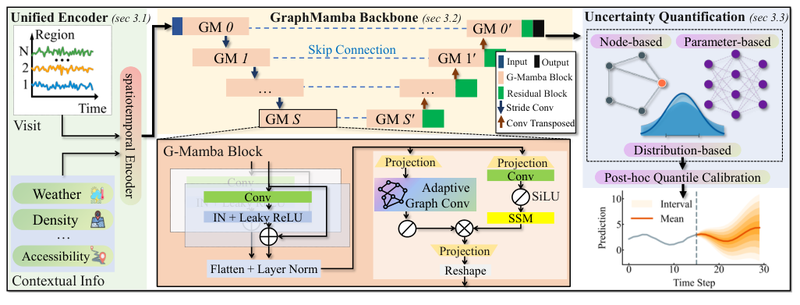
Healthcare facility visit prediction is essential for optimizing healthcare resource allocation and informing public health policy. Despite advanced machine learning methods being employed for better prediction performance, existing works usually formulate this task as a time-series forecasting problem without considering the intrinsic spatial dependencies of different types of healthcare facilities, and they also fail to provide reliable predictions under abnormal situations such as public emergencies. To advance existing research, we propose HealthMamba, an uncertainty-aware spatiotemporal framework for accurate and reliable healthcare facility visit prediction. HealthMamba comprises three key components: (i) a Unified Spatiotemporal Context Encoder that fuses heterogeneous static and dynamic information, (ii) a novel Graph State Space Model called GraphMamba for hierarchical spatiotemporal modeling, and (iii) a comprehensive uncertainty quantification module integrating three uncertainty quantification mechanisms for reliable prediction. We evaluate HealthMamba on four large-scale real-world datasets from California, New York, Texas, and Florida. Results show HealthMamba achieves around 6.0% improvement in prediction accuracy and 3.5% improvement in uncertainty quantification over state-of-the-art baselines.
@inproceedings{yu2026healthmamba, title = {HealthMamba: An Uncertainty-aware Spatiotemporal Graph State Space Model for Effective and Reliable Healthcare Facility Visit Prediction}, author = {Yu, Dahai and Jiang, Lin and Xu, Rongchao and Wang, Guang}, booktitle = {International Joint Conference on Artificial Intelligence}, pages = {7001--7009}, year = {2026}, doi = {10.24963/ijcai.2026/779}, note = {AI and Health Track}, } - SynHAT: A Two-stage Coarse-to-Fine Diffusion Framework for Synthesizing Human Activity TracesProceedings of the ACM on Interactive, Mobile, Wearable and Ubiquitous Technologies, 2026Presented at ACM UbiComp 2026
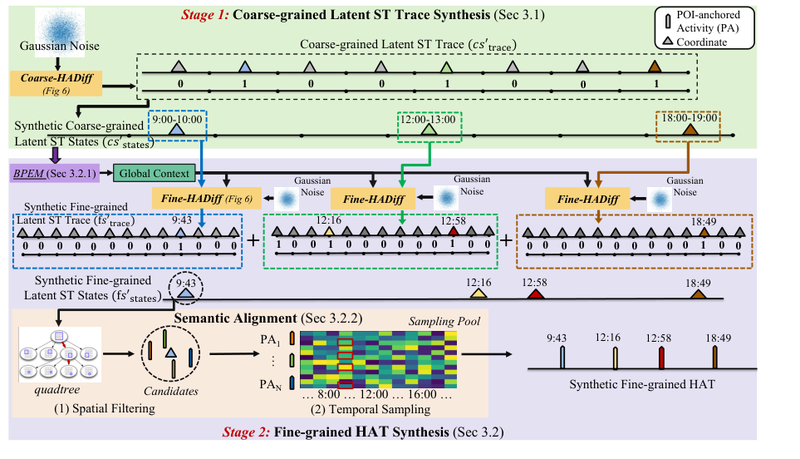
Human activity traces (HATs) are critical for many applications, including human mobility modeling and point-of-interest (POI) recommendation. However, growing privacy concerns have severely limited access to authentic large-scale HAT datasets. Recent advances in generative AI provide new opportunities to synthesize realistic and privacy-preserving HATs for such applications. Yet two major challenges remain: (i) HATs are highly irregular and dynamic, with long and varying time intervals, making it difficult to capture their complex spatio-temporal dependencies and underlying distributions; and (ii) generative models are often computationally expensive, making long-term, fine-grained HAT synthesis inefficient. To address these challenges, we propose SynHAT, a computationally efficient coarse-to-fine HAT synthesis framework built on a novel spatio-temporal denoising diffusion model. In Stage 1, we develop Coarse-HADiff, which models the overall spatio-temporal dependencies of coarse-grained latent spatio-temporal traces. It incorporates a novel Latent Spatio-Temporal U-Net with dual Drift-Jitter branches to jointly model smooth spatial transitions and temporal variations during denoising. In Stage 2, we introduce a three-step pipeline consisting of Behavior Pattern Extraction, Fine-HADiff, which shares the same architecture as Coarse-HADiff, and Semantic Alignment to generate fine-grained latent spatio-temporal traces from the Stage 1 outputs. We extensively evaluate SynHAT in terms of data fidelity, utility, privacy, robustness, and scalability. Experiments on real-world HAT datasets from four cities across three countries show that SynHAT substantially outperforms state-of-the-art baselines, achieving 52% and 33% improvements on spatial and temporal metrics, respectively.
@article{xu2026synhat, title = {SynHAT: A Two-stage Coarse-to-Fine Diffusion Framework for Synthesizing Human Activity Traces}, author = {Xu, Rongchao and Jiang, Lin and Yu, Dahai and Li, Ximiao and Wang, Guang}, journal = {Proceedings of the ACM on Interactive, Mobile, Wearable and Ubiquitous Technologies}, volume = {10}, number = {2}, pages = {69:1--69:35}, year = {2026}, doi = {10.1145/3810213}, note = {Presented at ACM UbiComp 2026} } - E4GEN: Event-level Explainable Extreme-Enhanced Time-series GenerationLin Jiang, Dahai Yu, Ximiao Li, and Guang WangIn Advances in Neural Information Processing Systems, 2026To appear.
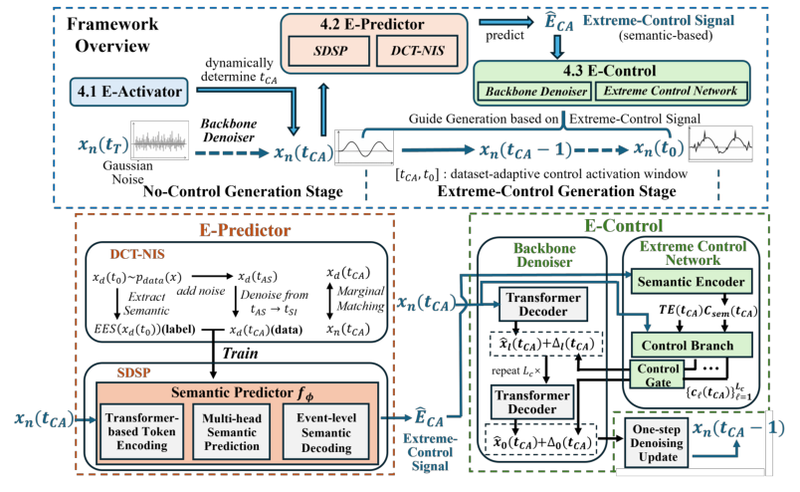
Generating realistic time series is essential for scientific research and real-world applications. However, existing methods often emphasize overall distributional fidelity while failing to faithfully capture extreme events. To advance existing research, we propose E4GEN, an explainable diffusion framework for extreme event-aware time-series generation. E4GEN provides systematic insights into when, what, and how to control extreme-event generation through three key components. First, E-Activator learns the dataset-adaptive extreme-control signal activation step during the denoising process without interfering with regular temporal components, including trend and seasonality. Second, E-Predictor determines what control signal to enforce through Self-Driven Semantic Prediction, where each sample derives its own control signal by inferring latent extreme-event information during generation. It also includes a novel Data-Conditioned Training, Noise-Initiated Sampling mechanism to address the issue of unavailable training labels. Third, E-Control specifies how to control extreme-event generation through a trainable Extreme Control Network, which transforms the semantic control signal into layer-wise signals and injects it into the denoising process. We evaluate E4GEN on six datasets with 17 metrics, and extensive experiments show that E4GEN outperforms state-of-the-art models across multiple dimensions, including overall fidelity, extreme-event fidelity, and downstream utility.
@inproceedings{jiang2026e4gen, title = {E4GEN: Event-level Explainable Extreme-Enhanced Time-series Generation}, author = {Jiang, Lin and Yu, Dahai and Li, Ximiao and Wang, Guang}, booktitle = {Advances in Neural Information Processing Systems}, year = {2026}, note = {To appear.} } - SynEHR: Joint Modeling Inter-visit Temporal Evolution and Intra-visit Clinical Structure for Longitudinal EHR SynthesisIn ACM International Conference on Information and Knowledge Management, 2026To appear.
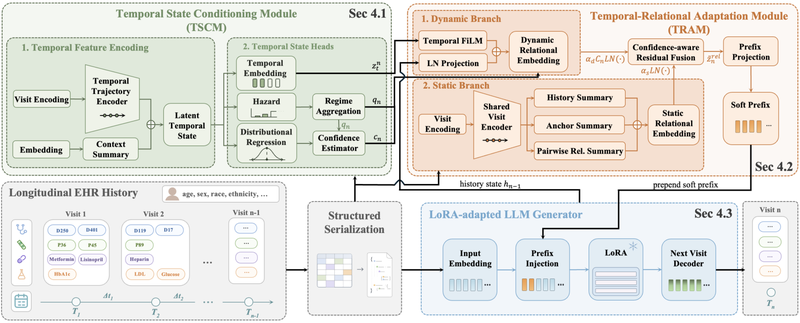
Longitudinal electronic health records (EHRs) document patients’ sequences of clinical visits over time, preserving the temporal evolution of disease progression and care delivery. However, real longitudinal EHRs are difficult to access because they contain large amounts of fine-grained, patient-specific information. Synthetic EHR generation therefore provides a valuable approach for preserving the statistical patterns and clinical structure of patient visit trajectories, enabling broader modeling and analysis when real records are limited. Although recent generative models have made progress in producing future visit sequences, they remain limited in explicitly integrating inter-visit irregular temporal evolution and intra-visit clinical event structures in EHRs, leading to clinically inconsistent and temporally unrealistic visit sequences. In this work, we propose SynEHR, a lightweight adaptive LLM-based framework for longitudinal EHR synthesis. There are two novel designs in SynEHR, i.e., a Temporal State Conditioning Module captures irregular temporal states across visits and a Temporal-Relational Adaptation Module combines these states with patient history to dynamically construct patient-specific relational representations. SynEHR then builds on a parameter-efficient LoRA-adapted language-model generator with next-visit generation capability to train the two modules for temporally and clinically informed generation. Extensive experiments on real-world EHR datasets across fidelity, privacy, and downstream utility evaluations demonstrate that SynEHR outperforms state-of-the-art models by generating more clinically coherent and temporally faithful longitudinal EHR data.
@inproceedings{li2026synehr, title = {SynEHR: Joint Modeling Inter-visit Temporal Evolution and Intra-visit Clinical Structure for Longitudinal EHR Synthesis}, author = {Li, Ximiao and Jiang, Lin and Xu, Rongchao and Yu, Dahai and He, Zhe and Wang, Guang}, booktitle = {ACM International Conference on Information and Knowledge Management}, year = {2026}, note = {To appear.} } - Measuring Healthcare Accessibility and Resilience for Smart and Connected Rural Communities: A Florida Panhandle Case StudyDahai Yu, Zhe He, Amber DeJohn, Xinyue Ye, and Guang WangarXiv preprint arXiv:2609.29639, 2026
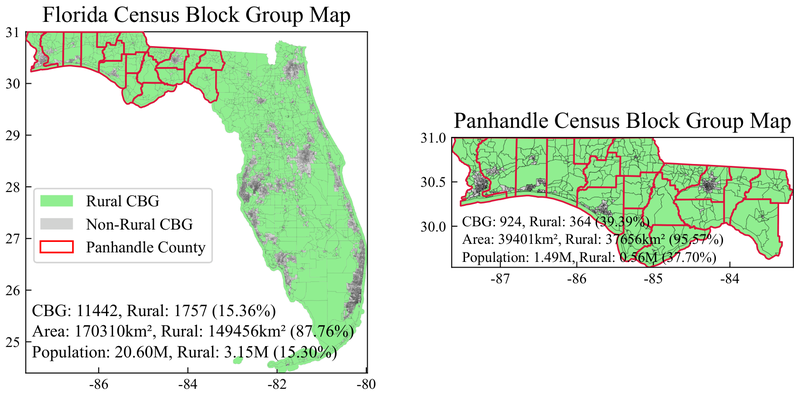
Rural communities in the United States face persistent healthcare disparities, with fewer providers and facilities, longer trips to care, lower health literacy, and weaker transportation and broadband infrastructure than their non-rural counterparts. Beyond any single barrier, healthcare accessibility is shaped jointly by the geographic availability of services, residents’ ability to reach those services, realized utilization, and the capacity of local systems to remain operational during disruptions, which are often examined separately and at coarse spatial scales, limiting their usefulness for community planning. We present a fine-grained, multi-source longitudinal measurement study of healthcare accessibility in Florida, with a focus on the hurricane-prone Florida Panhandle. We integrate healthcare-facility points of service, monthly mobility records from January 2018 through April 2021, Census Block Group (CBG)-level demographic data, and road-network data to compare rural and non-rural communities from supply, travel, utilization, and resilience perspectives. We find that 95.57% of the Panhandle’s land area is rural and that 46.7% of rural CBGs contain no healthcare facility in the pooled inventory. Rural residents have less than half the per-capita facility availability of non-rural residents. These disparities remain after measured demographic adjustment, while longitudinal patterns reveal substantial disruptions around Hurricane Michael and the COVID-19. Building on this evidence, we formulate an actionable planning framework that combines E2SFCA-based access estimation, stakeholder-weighted prioritization, and constrained deployment models for mobile clinics, non-emergency medical transportation, telehealth, and disaster-resilient services. The study demonstrates how community-oriented spatial intelligence can support equitable and resilient healthcare planning in rural regions.
@article{yu2026ruralhealth, title = {Measuring Healthcare Accessibility and Resilience for Smart and Connected Rural Communities: A Florida Panhandle Case Study}, author = {Yu, Dahai and He, Zhe and DeJohn, Amber and Ye, Xinyue and Wang, Guang}, journal = {arXiv preprint arXiv:2609.29639}, year = {2026}, } - ChainUQ: Reasoning Consistency-Aware Uncertainty Quantification for Large Language ModelsarXiv preprint arXiv:2609.26060, 2026
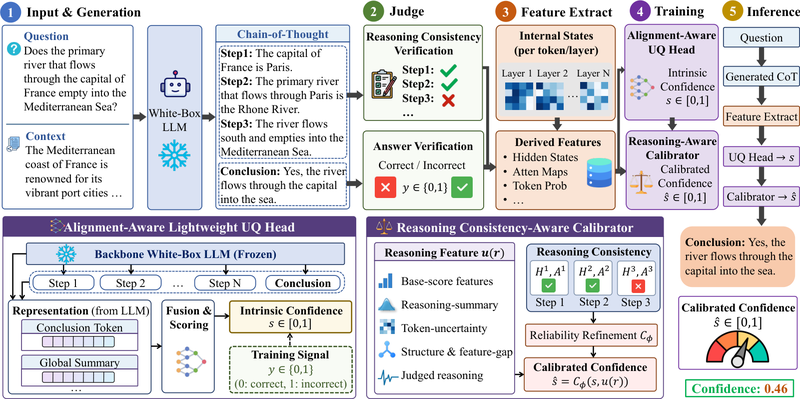
While large language models (LLMs) exhibit impressive reasoning capabilities, response-level confidence may remain unreliable when intermediate claims conflict with the final conclusion. Therefore, effective uncertainty quantification (UQ) is required to capture logical inconsistencies within the reasoning chain, not just the correctness of the final output. Current approaches have two major limitations: (1) their reliance on token-level probabilities fails to capture reasoning consistency, and (2) they lack mechanisms to dynamically calibrate confidence using the structural logic of the generated chain. To advance existing research, we introduce ChainUQ, a reasoning consistency-aware uncertainty quantification framework for LLMs. ChainUQ consists of two key technical components: an alignment-aware lightweight UQ module that estimates a raw intrinsic model confidence score from frozen features aligned to the final conclusion, and a reasoning consistency-aware calibrator that refines this score using reasoning-chain consistency evidence. Evaluations across diverse in-distribution and out-of-distribution benchmarks show that ChainUQ consistently improves response-level uncertainty estimation, achieving an average 3.1% relative gain in AUROC and up to 45.0% relative reduction in ECE, and can be directly transferred to new settings without additional fine-tuning.
@article{yu2026chainuq, title = {ChainUQ: Reasoning Consistency-Aware Uncertainty Quantification for Large Language Models}, author = {Yu, Dahai and Xu, Rongchao and Jiang, Lin and Li, Ximiao and Wang, Guang}, journal = {arXiv preprint arXiv:2609.26060}, year = {2026}, } - TrAC: Trace-Conditioned Answer Consistency for Efficient Uncertainty Quantification in LLMsarXiv preprint arXiv:2608.00422, 2026Submitted to ACM SIGKDD 2027.
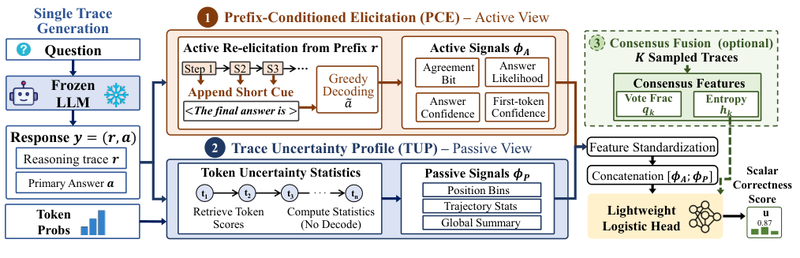
Large language models (LLMs) can generate fluent reasoning traces that nevertheless lead to incorrect answers, making response-level uncertainty estimation important for abstention, human review, and adaptive compute allocation. Existing approaches generally fall into three categories: passive single-trace methods use token-level confidence signals, sampling-based methods compare multiple complete traces at higher generation cost, and active prefix-based methods probe partial traces to study answer stabilization or preference transitions. However, none actively re-elicits an answer from a completed reasoning trace to measure its consistency with and support for the original answer. To address this gap, we introduce Trace-Conditioned Answer Consistency (TrAC), a correctness-supervised uncertainty quantification framework that combines active and passive signals anchored to one completed reasoning trace. Its active component, Prefix-Conditioned Elicitation (PCE), re-elicits a short answer conditioned on the completed trace and represents both its consistency with the original answer and its token-level probabilistic support. Its passive component, Trace Uncertainty Profile (TUP), summarizes how token-level uncertainty evolves throughout the original generation without additional decoding. A lightweight head then integrates the two representations into a response-correctness score. Across five mathematical reasoning benchmarks and three LLM families, TrAC improves macro AUROC by 1.8% and reduces AURC by 3.4% relative to eight-sample self-consistency, while using one complete reasoning trace and a short cached answer probe. When eight samples are already available, augmenting sample consensus with re-elicitation further improves macro AUROC by 4.3% and reduces AURC by 8.3%, without additional full-trace generation.
@article{yu2026trac, title = {TrAC: Trace-Conditioned Answer Consistency for Efficient Uncertainty Quantification in LLMs}, author = {Yu, Dahai and Jiang, Lin and Xu, Rongchao and Wang, Guang}, journal = {arXiv preprint arXiv:2608.00422}, year = {2026}, note = {Submitted to ACM SIGKDD 2027.}, } - SymboUQ: Symbolic Uncertainty Quantification for Spatial Reasoning in LLMsarXiv preprint arXiv:2608.00417, 2026Submitted to AAAI 2027.
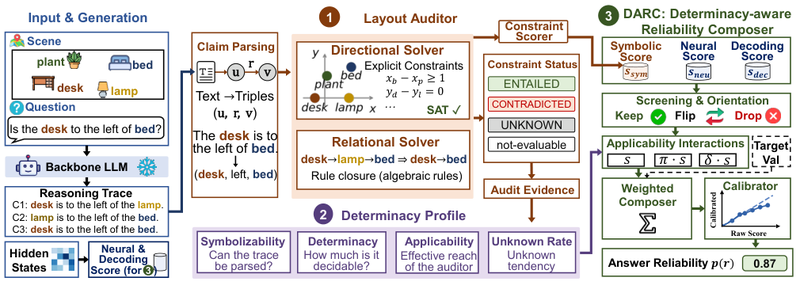
Although large language models (LLMs) can produce fluent spatial reasoning traces, their intermediate relations may fail to support the final conclusion, making token-level confidence insufficient for final-answer reliability estimation. Existing formal verifiers provide stronger semantic evidence, but their applicability is partial: a parsed claim need not yield a definite semantic verdict. To address this issue, we introduce SymboUQ, a symbolic uncertainty quantification framework that estimates final-answer reliability from reasoning traces by distinguishing symbolizability, whether a claim can be represented in the verifier’s formal language, from semantic determinacy, whether its execution yields an entailed or contradicted verdict rather than an unknown or not-evaluable outcome. SymboUQ comprises (i) a Layout Auditor that executes ordered spatial claims and extracts feasibility, conflict, and repair evidence; (ii) a label-free Determinacy Profile that characterizes effective executable coverage; and (iii) a Determinacy-Aware Reliability Composer that integrates constraint-based, representation-based, and decoding-based scores according to verifier applicability. Extensive experiments on five spatial reasoning benchmarks with four frozen LLM backbones show that SymboUQ achieves approximately an 8% relative improvement in AUROC and a 7% relative reduction in class-balanced Brier loss over the strongest baseline.
@article{yu2026symbouq, title = {SymboUQ: Symbolic Uncertainty Quantification for Spatial Reasoning in LLMs}, author = {Yu, Dahai and Jiang, Lin and Xu, Rongchao and Wang, Guang}, journal = {arXiv preprint arXiv:2608.00417}, year = {2026}, note = {Submitted to AAAI 2027.}, } - SynEnergy: Anomaly Semantic-Guided Diffusion for Synthetic Energy Data GenerationLin Jiang, Dahai Yu, Ravikumar Gelli, and Guang WangarXiv preprint arXiv:2608.03087, 2026
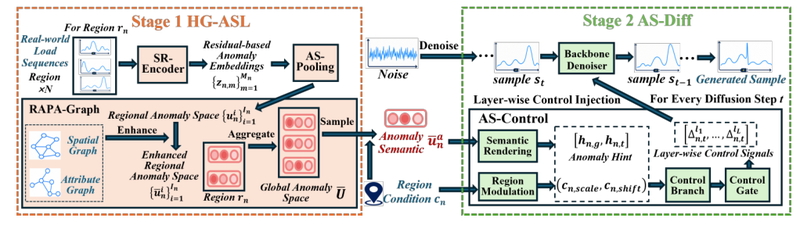
Fine-grained energy consumption data are essential for applications such as demand forecasting, demand response planning, and grid reliability assessment. However, access to such data is often restricted by privacy concerns and data-sharing constraints, motivating growing interest in synthetic energy data generation. Although existing methods can reproduce overall consumption distributions and recurring temporal patterns, they often smooth out or underrepresent anomalous events caused by extreme weather, infrastructure failures, and behavioral shifts. Preserving these events is challenging because they are sparse, localized in time and space, and shaped by heterogeneous dependencies across geographical proximity and regional attributes. To address these challenges, we propose SynEnergy, a two-stage diffusion-based framework for anomaly-preserving energy consumption data generation. The first stage, Heterogeneous Graph-based Anomaly Semantic Learning (HG-ASL), extracts region-specific anomaly semantics from sparse residual structures by jointly modeling spatial and attribute dependencies across urban regions. The second stage, Anomaly Semantic-guided Diffusion (AS-Diff), injects the learned anomaly semantics into the denoising process to generate realistic consumption sequences while preserving anomalous patterns. This design enables controllable generation for individual regions and scales naturally to city-wide settings. We evaluate SynEnergy on four real-world energy consumption datasets against 11 general-purpose and energy-specific generation baselines. Experimental results show that SynEnergy improves anomaly preservation fidelity by an average of 12.21% and downstream quality by 2.96%, while maintaining competitive overall generation fidelity compared to baselines.
@article{jiang2026synenergy, title = {SynEnergy: Anomaly Semantic-Guided Diffusion for Synthetic Energy Data Generation}, author = {Jiang, Lin and Yu, Dahai and Gelli, Ravikumar and Wang, Guang}, journal = {arXiv preprint arXiv:2608.03087}, year = {2026}, } - ZeroHAT: Behavior-Conditioned Zero-Shot Human Activity Trace GenerationarXiv preprint arXiv:2609.20310, 2026
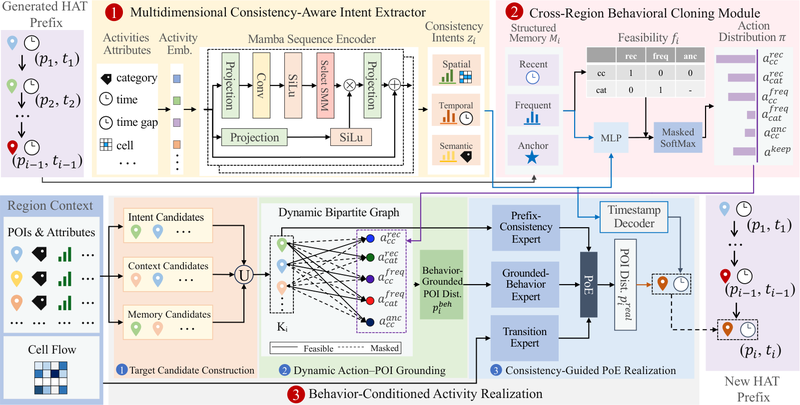
Human activity traces record individuals’ timestamped visits to points of interest and are essential for applications such as mobility prediction and urban simulation. However, accessing large-scale HATs is challenging due to high collection costs and privacy concerns. Synthetic HAT generation offers a promising way to make such data available and has attracted growing interest from both industry and academia. Although many efforts have been devoted to this topic, most of them rely on real data from a region to generate synthetic data for the same region, which is infeasible for the many regions where real HATs are unavailable. To fill this gap, we propose ZeroHAT, a behavior-conditioned framework that generates synthetic HATs for a target region in a zero-shot manner by transferring behavioral patterns learned from real HATs in source regions and adapting them with publicly available contextual information about the target region. ZeroHAT has three key novel components: (i) a multidimensional consistency-aware intent extractor; (ii) a cross-region behavioral cloning module; and (iii) a behavior-conditioned activity realization module. We evaluate ZeroHAT on a ten-city benchmark, where extensive experiments show that ZeroHAT achieves 4.5-6.4x the normalized downstream utility of the strongest baseline and improves average fidelity by 15.6%-40.8% across target regions.
@article{xu2026zerohat, title = {ZeroHAT: Behavior-Conditioned Zero-Shot Human Activity Trace Generation}, author = {Xu, Rongchao and Yu, Dahai and Jiang, Lin and Wang, Guang}, journal = {arXiv preprint arXiv:2609.20310}, year = {2026}, } - MBDiff: Multi-view Behavior-aware Diffusion Model for Probabilistic Utility Data ImputationarXiv preprint arXiv:2607.29177, 2026
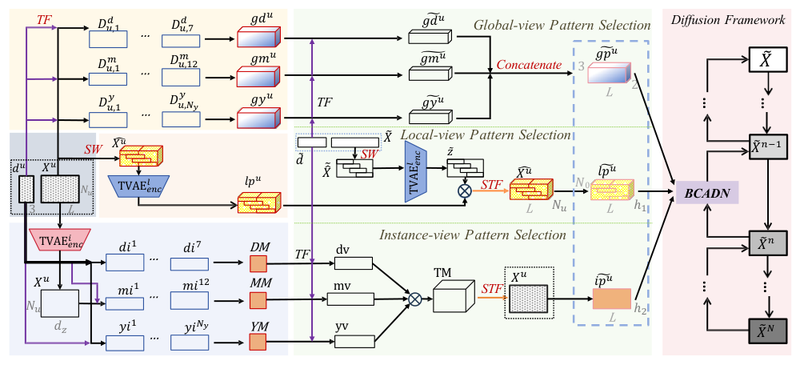
Utility data (e.g., electricity, water, and gas consumption), collected by ubiquitous sensors and embedded devices, often contains substantial missing values due to various factors such as device failures and data transmission issues. The data missingness can severely impact utility billing accuracy, hinder demand forecasting, and disrupt efficient utility supply management. As a result, utility data imputation has attracted much interest from both industry and academia. While many studies have attempted to address this issue, most of them rely on aggregated datasets for training, overlooking rich user behavior information, which could provide valuable insights for more accurate imputation. However, learning comprehensive user behavior from long-term, diverse, and incomplete utility data remains a significant challenge. Moreover, leveraging user behavior information to guide imputation is nontrivial due to the indirect nature of the correlations. To address these challenges, we propose MBDiff, a Multi-view Behavior-aware Diffusion Model for Probabilistic Utility Data Imputation. MBDiff incorporates two key technical components: (i) a multi-view User Behavior Extraction module that learns comprehensive user behavior from multiple perspectives, including global, local, and instance-level views; and (ii) a behavior-aware conditional diffusion model consisting of a reference selection module and a conditional attentional denoising network to impute utility data in a computationally efficient manner. We implement and evaluate MBDiff by collaborating with one of the largest municipal utility providers in Florida. Experimental results demonstrate our proposed MBDiff effectively outperforms state-of-the-art baselines, e.g., it improves 7.04% and 29.1% on the electricity and water usage datasets for block missingness imputation, respectively.
@article{xu2026mbdiff, title = {MBDiff: Multi-view Behavior-aware Diffusion Model for Probabilistic Utility Data Imputation}, author = {Xu, Rongchao and Jiang, Lin and Yu, Dahai and Li, Ximiao and Wang, Guang}, journal = {arXiv preprint arXiv:2607.29177}, year = {2026}, } - MobiDiff: Semantic-Aware Multi-Channel Discrete Diffusion for Human Mobility Data GenerationarXiv preprint arXiv:2607.08357, 2026
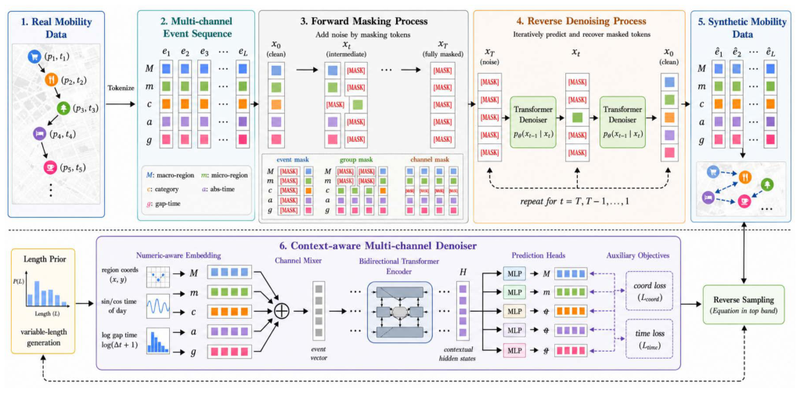
Human mobility data are essential for transportation optimization, urban planning, and resource allocation, yet real-world mobility data are costly to collect and difficult to share due to privacy concerns. Recent diffusion-based methods have shown promise in synthesizing realistic mobility patterns, but they typically rely on continuous or latent spatio-temporal traces, limiting their ability to natively model discrete semantic events with explicit region, activity, time, and interval structures. To address this issue, we introduce MobiDiff, an end-to-end discrete diffusion framework that efficiently generates mobility data by directly denoising multi-channel semantic skeletons, avoiding the costly interpolation, latent trace construction, and coarse-to-fine realization pipelines widely used in existing diffusion-based methods. Specifically, MobiDiff decomposes each human check-in event into spatial, activity, and temporal channels, and employs structured event-, group-, and channel-level masking to jointly capture trajectory-level mobility patterns and within-event dependencies. We evaluate generation fidelity, privacy-preserving, and efficiency on three large-scale real-world datasets from Atlanta, Boston, and Seattle. Results show that MobiDiff effectively preserves trajectory length and temporal interval distributions while remaining competitive across broader mobility statistics; it is also much faster than state-of-the-art methods, e.g., 5.3x faster than GeoGen on average during inference. These findings suggest that discrete diffusion offers an interpretable and efficient framework for synthetic mobility data generation.
@article{xu2026mobidiff, title = {MobiDiff: Semantic-Aware Multi-Channel Discrete Diffusion for Human Mobility Data Generation}, author = {Xu, Rongchao and Jiang, Lin and Yu, Dahai and Li, Ximiao and Liu, Taichi and Zhang, Desheng and Tian, Yuan and Wang, Guang}, journal = {arXiv preprint arXiv:2607.08357}, year = {2026}, } - Diffusion Model-Based Data Assimilation for Real-World Energy Consumption ForecastingarXiv preprint arXiv:2605.29072, 2026
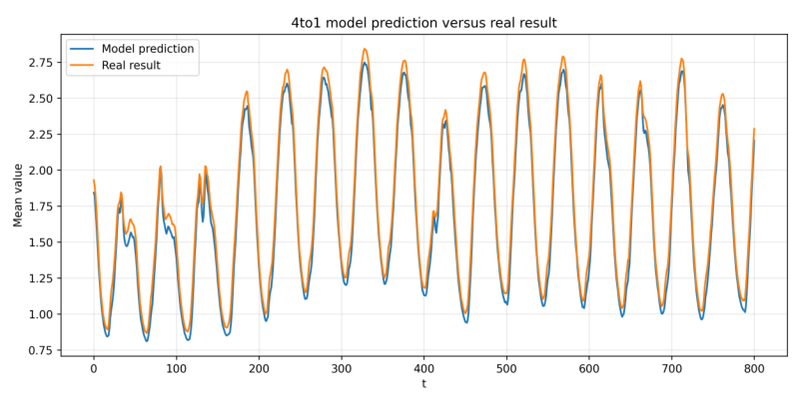
Accurate estimation and forecasting of energy consumption are important for power-system operation, planning, and demand-side management. In practice, however, complete and timely measurements may not always be available, and the observed data can be partial, noisy, or delayed. This motivates the use of learned forecasting models for predicting the evolving consumption state, together with data assimilation methods for sequential forecast correction. In this work, we study a high-dimensional data assimilation problem for real energy-consumption data. The forward prediction is supplied by a pretrained black-box spatio-temporal forecasting model, which is treated as the state propagator in the filtering procedure. We employ the Ensemble Score Filter (EnSF) to assimilate partial and noisy observations and to correct the forecast trajectory over time. The EnSF uses score-based diffusion models to approximate filtering distributions and avoids retraining neural-network score models during assimilation by using a closed-form score representation and Monte Carlo approximation. Numerical experiments demonstrate that open-loop propagation of the learned forecasting model can become unreliable over long horizons, while EnSF-based correction substantially improves state estimation. Comparisons with the Ensemble Kalman Filter (EnKF) further show that EnSF provides stronger correction under the nonlinear observation setting considered in this work.
@article{hu2026ensf, title = {Diffusion Model-Based Data Assimilation for Real-World Energy Consumption Forecasting}, author = {Hu, Ruoyu and Yu, Dahai and Bao, Feng and Wang, Guang and Zhang, Guannan}, journal = {arXiv preprint arXiv:2605.29072}, year = {2026}, } - FusionTransNet for Smart Urban Mobility: Spatiotemporal Traffic Forecasting Through Multimodal Network IntegrationLeng Yan, Yunxin Sang, Dahai Yu, Binwu Wang, and Guang WangManagement Science, 2026Under minor revision.
@article{yan2026fusiontransnet,
  title = {FusionTransNet for Smart Urban Mobility: Spatiotemporal Traffic Forecasting Through Multimodal Network Integration},
  author = {Yan, Leng and Sang, Yunxin and Yu, Dahai and Wang, Binwu and Wang, Guang},
  journal = {Management Science},
  year = {2026},
  note = {Under minor revision.}
}
2025
- UQGNN: Uncertainty Quantification of Graph Neural Networks for Multivariate Spatiotemporal PredictionIn ACM SIGSPATIAL International Conference on Advances in Geographic Information Systems, 2025
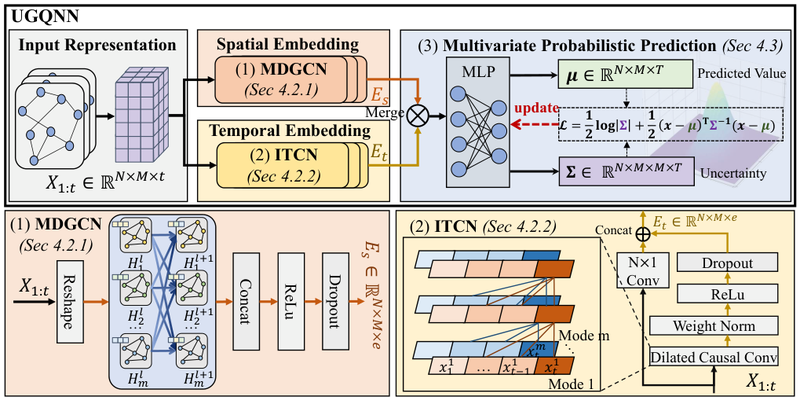
Spatiotemporal prediction plays a critical role in numerous real-world applications such as urban planning, transportation optimization, disaster response, and pandemic control. In recent years, researchers have made significant progress by developing advanced deep learning models for spatiotemporal prediction. However, most existing models are deterministic, i.e., predicting only the expected mean values without quantifying uncertainty, leading to potentially unreliable and inaccurate outcomes. While recent studies have introduced probabilistic models to quantify uncertainty, they typically focus on a single phenomenon (e.g., taxi, bike, crime, or traffic crashes), thereby neglecting the inherent correlations among heterogeneous urban phenomena. To address the research gap, we propose a novel Graph Neural Network with Uncertainty Quantification, termed UQGNN for multivariate spatiotemporal prediction. UQGNN introduces two key innovations: (i) an Interaction-aware Spatiotemporal Embedding Module that integrates a multivariate diffusion graph convolutional network and an interaction-aware temporal convolutional network to effectively capture complex spatial and temporal interaction patterns, and (ii) a multivariate probabilistic prediction module designed to estimate both expected mean values and associated uncertainties. Extensive experiments on four real-world multivariate spatiotemporal datasets from Shenzhen, New York City, and Chicago demonstrate that UQGNN consistently outperforms state-of-the-art baselines in both prediction accuracy and uncertainty quantification. For example, on the Shenzhen dataset, UQGNN achieves a 5% improvement in both prediction accuracy and uncertainty quantification.
@inproceedings{yu2025uqgnn, title = {UQGNN: Uncertainty Quantification of Graph Neural Networks for Multivariate Spatiotemporal Prediction}, author = {Yu, Dahai and Zhuang, Dingyi and Jiang, Lin and Xu, Rongchao and Ye, Xinyue and Bu, Yuheng and Wang, Shenhao and Wang, Guang}, booktitle = {ACM SIGSPATIAL International Conference on Advances in Geographic Information Systems}, pages = {52--65}, year = {2025}, doi = {10.1145/3748636.3762709}, } - Uncertainty-aware Predict-Then-Optimize Framework for Equitable Post-Disaster Power RestorationIn International Joint Conference on Artificial Intelligence, 2025AI and Social Good Track
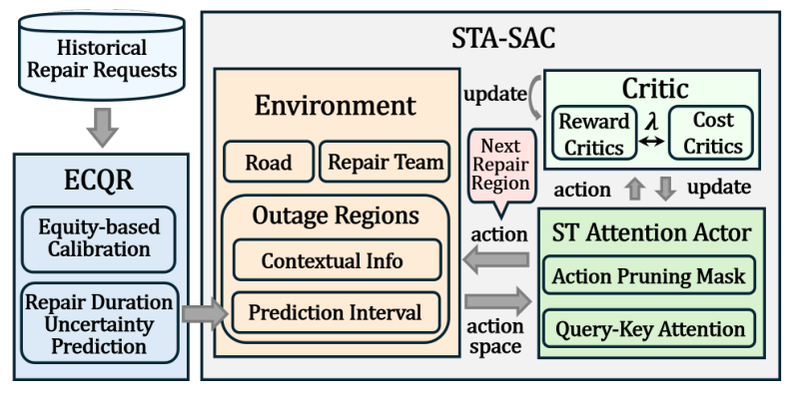
The increasing frequency of extreme weather events, such as hurricanes, highlights the urgent need for efficient and equitable power system restoration. Many electricity providers make restoration decisions primarily based on the volume of power restoration requests from each region. However, our data-driven analysis reveals significant disparities in request submission volume, as disadvantaged communities tend to submit fewer restoration requests. This disparity makes the current restoration solution inequitable, leaving these communities vulnerable to extended power outages. To address this, we aim to propose an equity-aware power restoration strategy that balances both restoration efficiency and equity across communities. However, achieving this goal is challenging for two reasons: the difficulty of predicting repair durations under dataset heteroscedasticity, and the tendency of reinforcement learning agents to favor low-uncertainty actions, which potentially undermine equity. To overcome these challenges, we design a predict-then-optimize framework called EPOPR with two key components: (1) Equity-Conformalized Quantile Regression for uncertainty-aware repair duration prediction, and (2) Spatial-Temporal Attentional RL that adapts to varying uncertainty levels across regions for equitable decision-making. Experimental results show that our EPOPR effectively reduces the average power outage duration by 3.60% and decreases inequity between different communities by 14.19% compared to state-of-the-art baselines.
@inproceedings{jiang2025epopr,
  title = {Uncertainty-aware Predict-Then-Optimize Framework for Equitable Post-Disaster Power Restoration},
  author = {Jiang, Lin and Yu, Dahai and Xu, Rongchao and Tang, Tian and Wang, Guang},
  booktitle = {International Joint Conference on Artificial Intelligence},
  pages = {9719--9727},
  year = {2025},
  doi = {10.24963/ijcai.2025/1080},
  note = {AI and Social Good Track}
}
2023
- Sentiment Classification of Scientific Citation Based on Modified BERT Attention by Sentiment DictionaryDahai Yu and Bolin HuaIn Workshop on Extraction and Evaluation of Knowledge Entities from Scientific Documents (EEKE @ JCDL), 2023
@inproceedings{yu2023citation,
  title = {Sentiment Classification of Scientific Citation Based on Modified BERT Attention by Sentiment Dictionary},
  author = {Yu, Dahai and Hua, Bolin},
  booktitle = {Workshop on Extraction and Evaluation of Knowledge Entities from Scientific Documents (EEKE @ JCDL)},
  volume = {3451},
  year = {2023},
}
2021
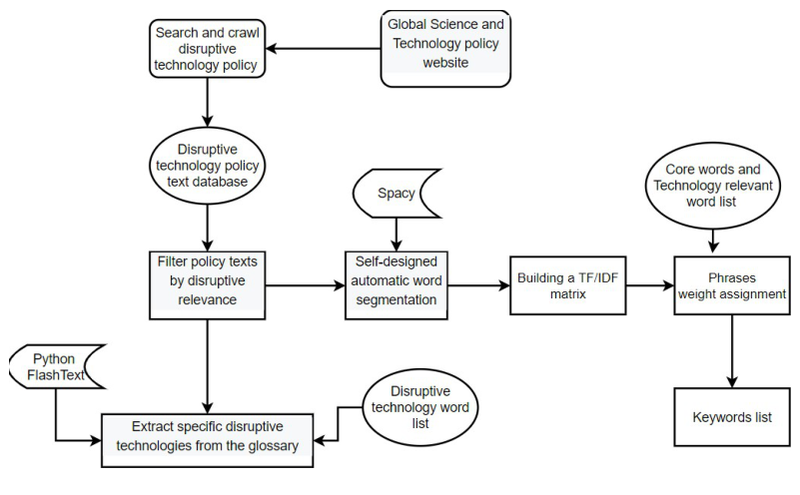
- Keyword Extraction and Technology Entity Extraction for Disruptive Technology Policy TextsAofei Chang, Bolin Hua, and Dahai YuIn Workshop on Extraction and Evaluation of Knowledge Entities from Scientific Documents (EEKE @ JCDL), 2021
@inproceedings{chang2021keyword,
  title = {Keyword Extraction and Technology Entity Extraction for Disruptive Technology Policy Texts},
  author = {Chang, Aofei and Hua, Bolin and Yu, Dahai},
  booktitle = {Workshop on Extraction and Evaluation of Knowledge Entities from Scientific Documents (EEKE @ JCDL)},
  volume = {3004},
  year = {2021},
}