Introduction
Most mobility data are proprietary and thus cannot be accessed by the research community unless released by data owners. Recently, under the context of Data Science for Social Good, some data owners are willing to share their data to unlock the data value. In addition, the recent advance of Generative AI provide a new opportunity for data synthesis.
New Opportunities
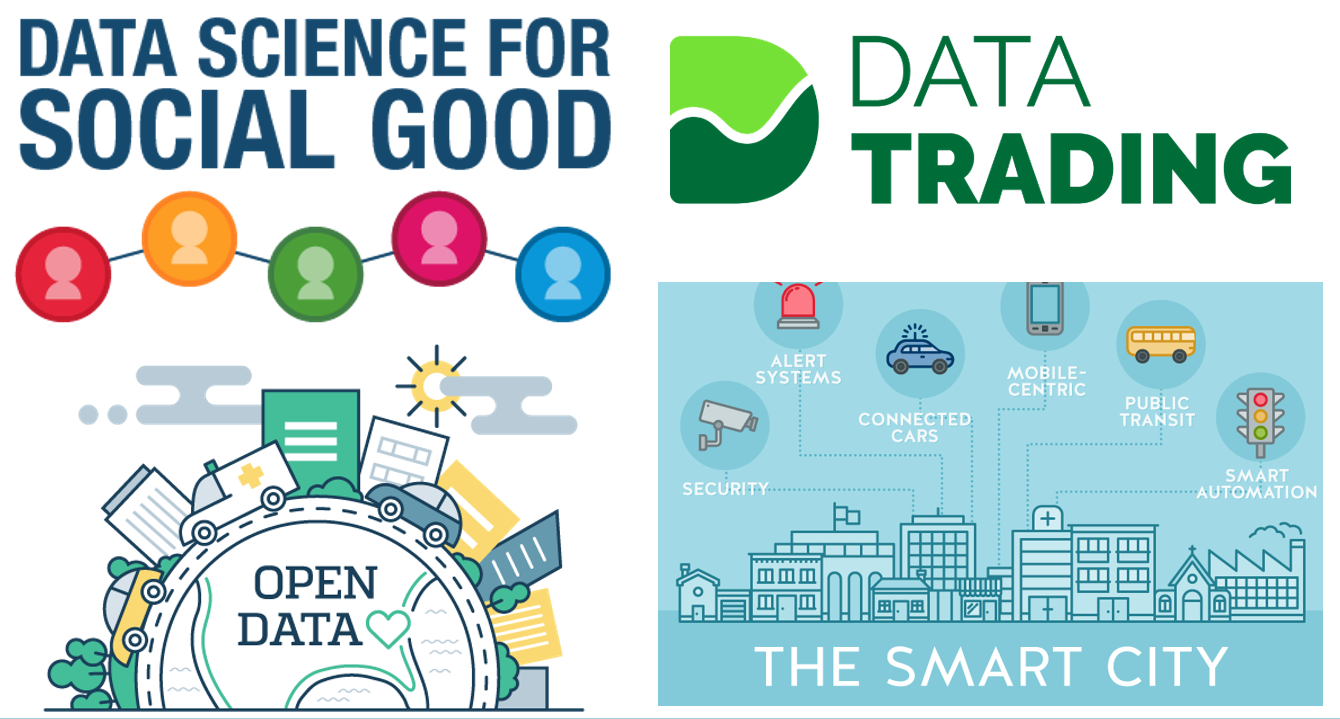
New Challenges
- Low Usability due to Data Quality.
- Use Case Uncertainty due to Data Implicitness.
- High Privacy Risks due to Data Sensitivity.
Our Research Goal
- Fundamental Research Innovation
- Empower S&E Research with Synthetic Data
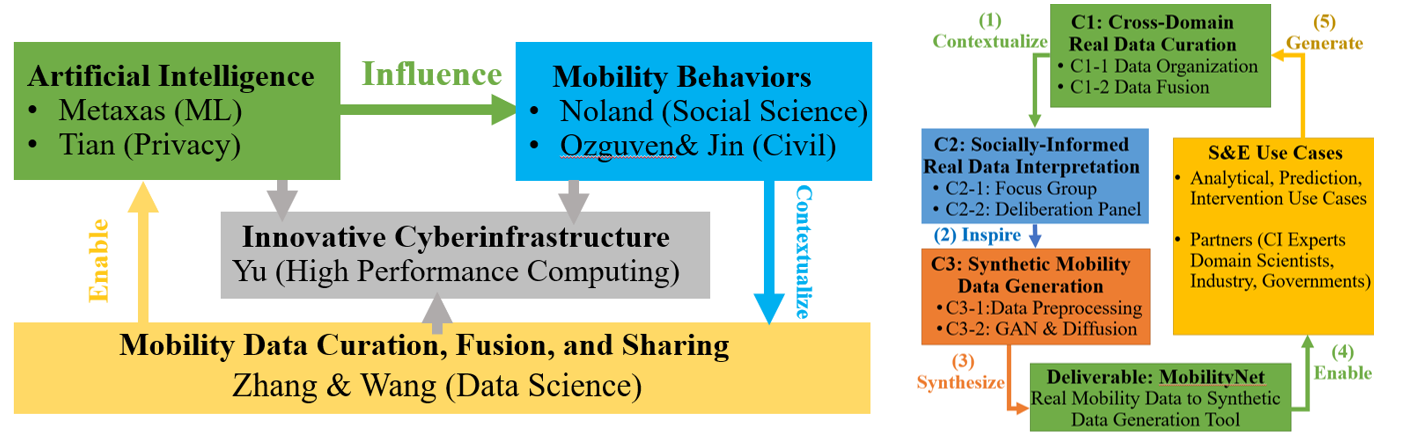
Interdisciplinary Approach
Use Cases
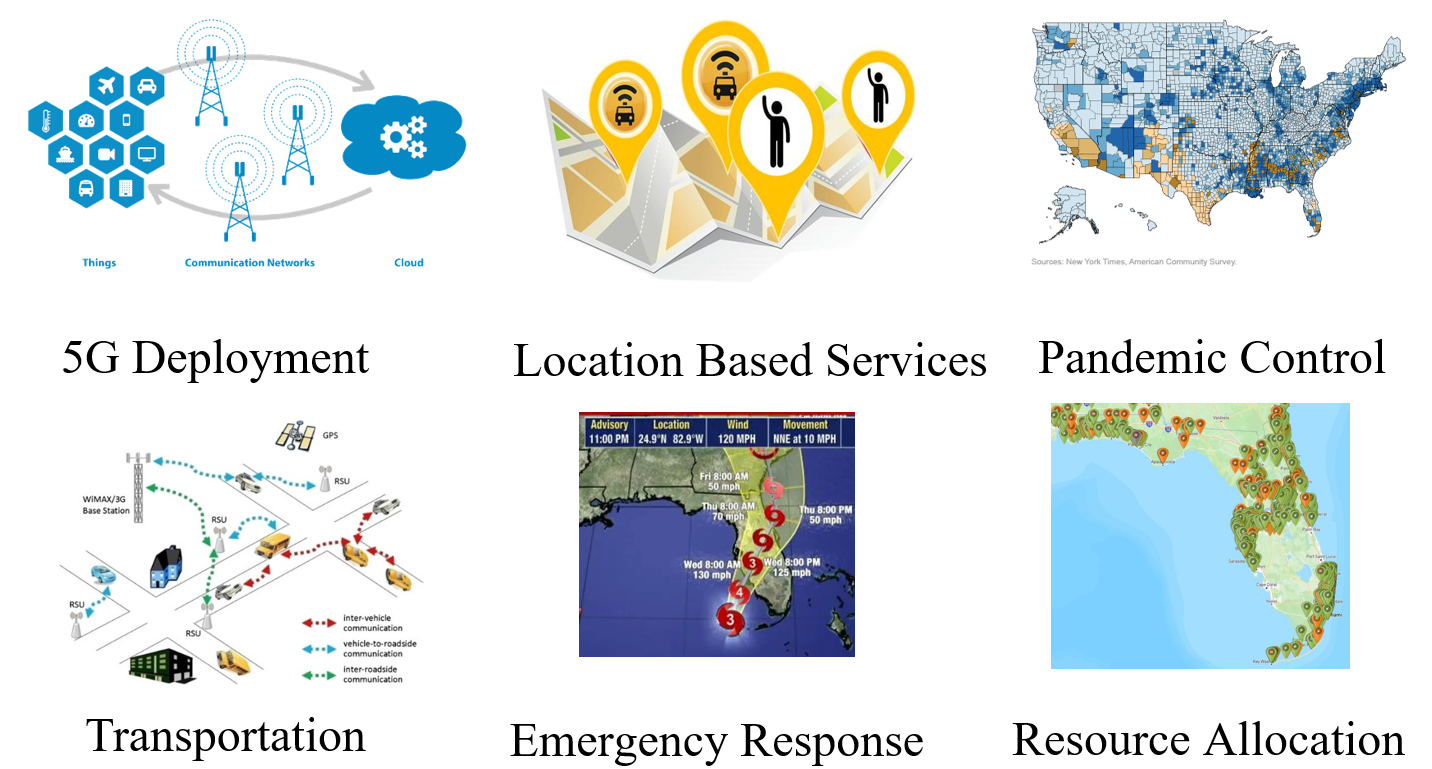
Progress Summary
- Designed a novel autoregressive spatio-temporal denoising diffusion model called AutoSTDiff for mobility data generation
- Designed a privacy attack suite called POIPrivacy containing data extraction and membership inference attacks
- Studied three mobility data-based use cases including transportation transfer time prediction, waiting time understand, and mobility flow prediction
- Publications in ACM KDD, ACM CSCW, SIAM SDM, ACM CIKM, ACM SIGSPATIAL
- Shared a privacy attack suite and codes of eight different synthetic mobility data generation models through GitHub.
- New graduate-level and undergraduate-level course materials
- Research for over 10 K-12 to Ph.D. students
Diffusion Model for Data Generation
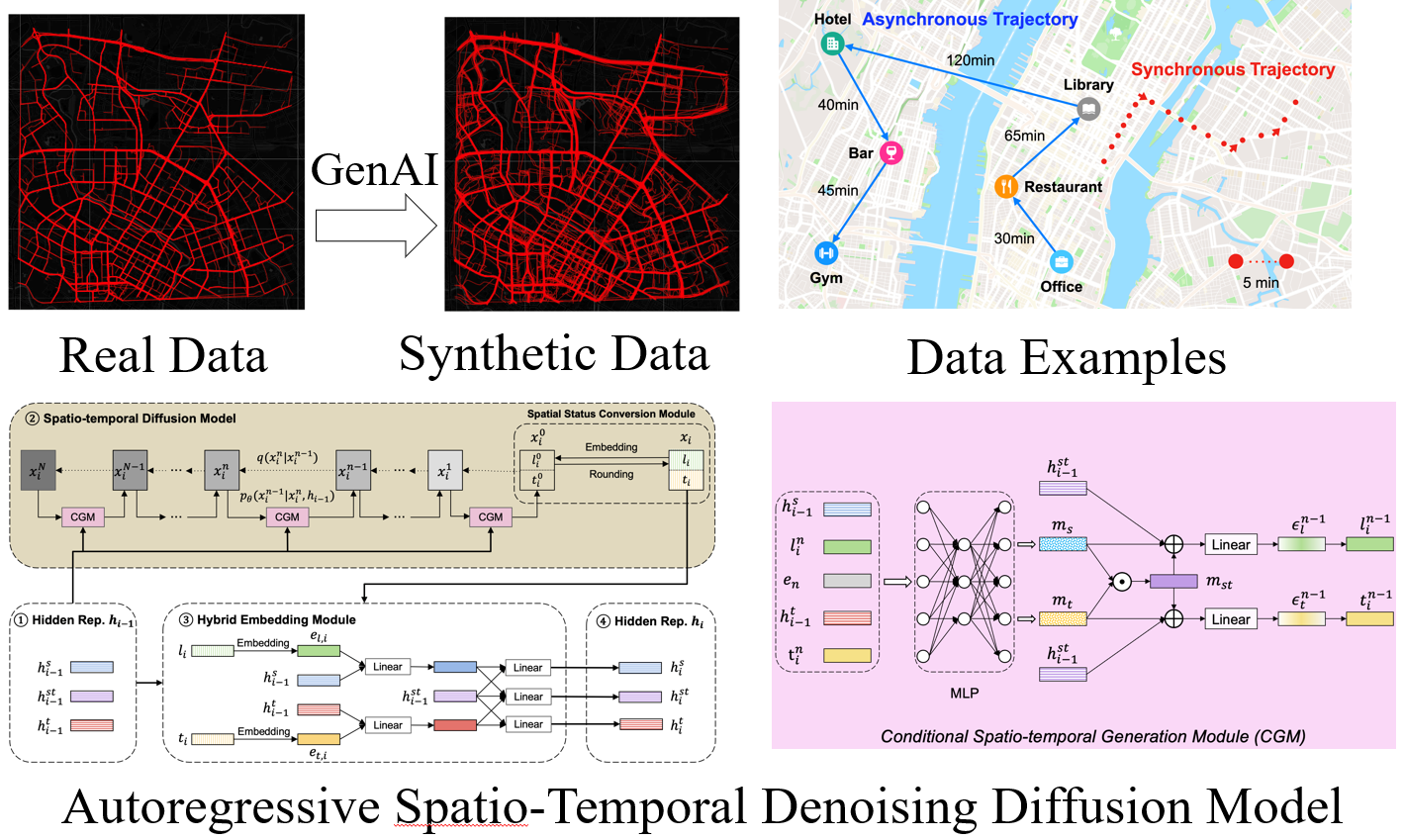
Mobility Privacy Attack Suite
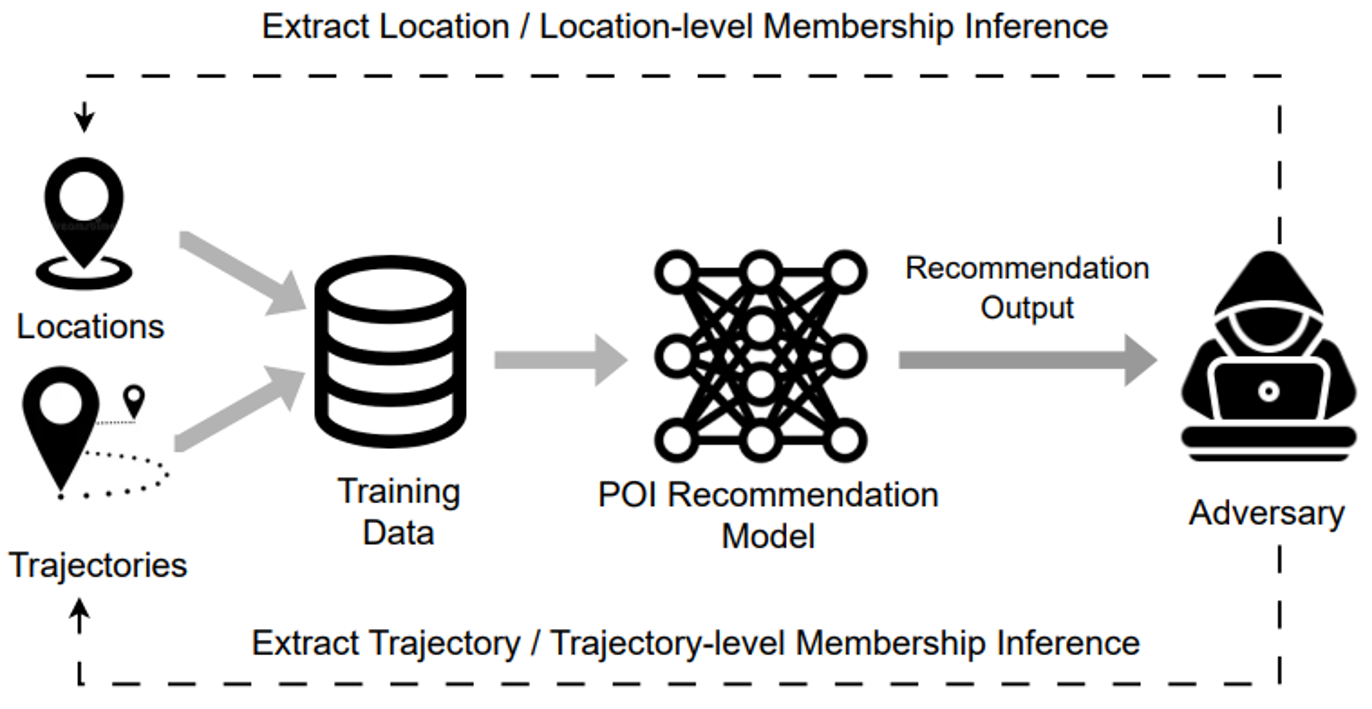
We introduce a novel privacy attack suite that incorporates unique characteristics of mobility data (e.g., spatial-temporal information) into the attack design.
Project Plan
- Mobility Data Generation Based on LLMs
- Novel Threat Models and Defense Models
- Project Website Design and Dissemination
- Mobility Data-focused Workshop